Introduction: What Is the Internet?
The internet is a vast, global network that connects millions of private, public, academic, business, and government networks, enabling the exchange of information and communication. Its roots trace back to the 1960s when the U.S. Department of Defense developed ARPANET to share information across decentralized systems. Over the decades, the internet has evolved from a niche technology into a cornerstone of modern life.
The way we access the internet has also transformed significantly. Early connections, like dial-up and ISDN (Integrated Services Digital Network), were slow and required tying up phone lines. However, advancements in technology have ushered in faster, more reliable options. Let’s delve into the major types of internet connections available today.
What Is the Internet Used for Today?
The internet is an indispensable tool in modern life, revolutionizing how we communicate, work, learn, and entertain ourselves. It has become a platform for connectivity, collaboration, and innovation, impacting virtually every aspect of daily life.
Communication and Social Networking
One of the primary uses of the internet is communication. Email, instant messaging, and video conferencing platforms like Zoom and Microsoft Teams allow people to connect across the globe in real time. Social networking sites like Facebook, Instagram, and LinkedIn enable users to share experiences, build relationships, and maintain professional connections.
Work and Business
The internet is the backbone of the modern workplace. Remote work has grown exponentially, with tools like Slack, Asana, and cloud-based systems facilitating collaboration. E-commerce platforms, such as Amazon and Shopify, have transformed retail, while businesses use digital marketing to reach broader audiences.
Education and Learning
Online education has surged in popularity, offering flexibility and accessibility. Platforms like Coursera, Khan Academy, and YouTube provide free and paid courses on diverse topics, making learning more democratic. Virtual classrooms and tools like Google Classroom have become staples in traditional education.
Entertainment
Streaming services like Netflix, Spotify, and YouTube dominate how people consume entertainment. Online gaming, live streaming, and social media challenges are also major recreational activities.
Information and Research
Search engines like Google and online encyclopedias like Wikipedia allow instant access to vast amounts of information. News outlets, blogs, and forums ensure that users stay informed on current events and specialized topics.
Health and Fitness
Telemedicine, wearable devices, and fitness apps have made healthcare more accessible. Patients can consult doctors remotely, track their health metrics, and access wellness resources online.
Financial Transactions
From online banking and investing to payment apps like PayPal and Venmo, the internet simplifies managing finances.
In essence, the internet is a versatile tool that powers communication, commerce, learning, and leisure, making it an integral part of modern society.
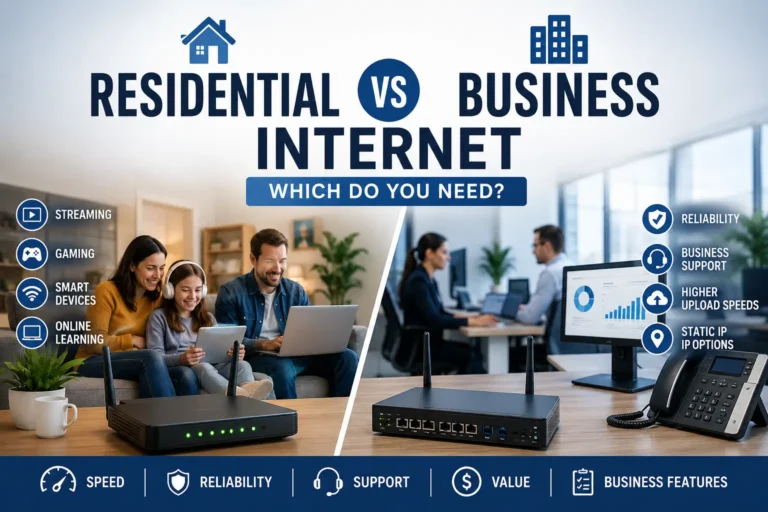
Not sure whether a standard home internet plan is enough for your needs? If your connection supports remote work, customer payments, VoIP calls, cloud tools, or daily business operations, it may be worth comparing your options.
Read our full breakdown of Residential vs Business Internet.
Types of Internet Connections
In today’s digital age, the internet is the foundation of how we communicate, work, learn, and entertain ourselves. From streaming movies to hosting virtual meetings and connecting with loved ones, internet access has become a basic necessity. However, not all internet connections are created equal, and the type of connection you use can significantly impact your online experience.
Over the years, internet technology has evolved from the slow and noisy dial-up connections of the 1990s to lightning-fast fiber-optic networks. Each type of internet connection—be it cable, DSL, fiber, wireless, or satellite—comes with its unique characteristics, benefits, and limitations. These options cater to different needs, ranging from casual browsing to high-speed gaming or remote work.
Understanding the types of internet connections available is essential for making informed decisions about your connectivity needs. Let’s explore the various technologies shaping how we access the online world.
Fiber Internet

Overview:
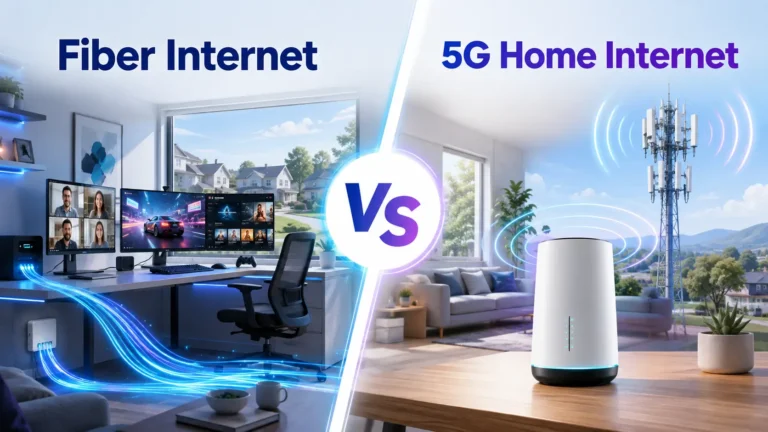
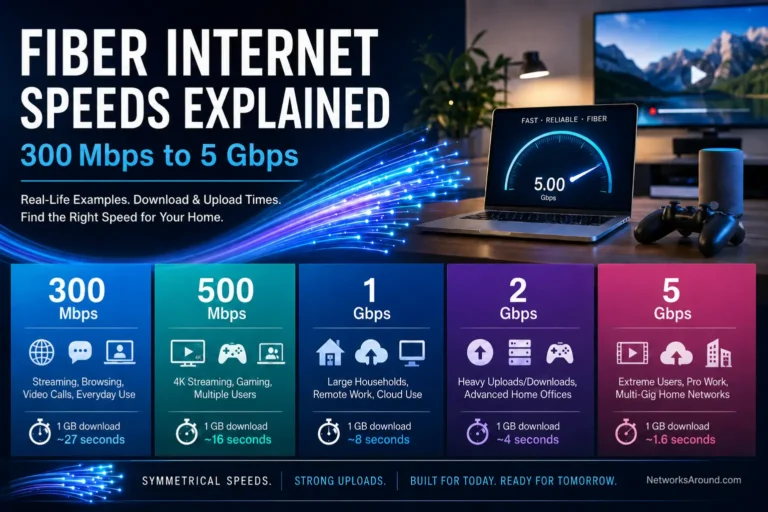
Fiber-optic internet is considered the gold standard of modern internet connectivity. It uses fiber-optic cables that transmit data as pulses of light, offering unmatched speeds and reliability.
Key Features:
- Speeds up to 1 Gbps or higher
- Symmetrical upload and download speeds
- Low latency, ideal for gaming and video conferencing
- Not affected by electromagnetic interference
Pros and Cons:
Fiber offers blazing-fast speeds, but it’s not as widely available as other types of internet connections due to the high cost of infrastructure deployment.
Best For:
Gamers, remote workers, streamers, and households with heavy internet use.
Providers: AT&T Fiber, Verizon Fios, Google Fiber, CenturyLink, Frontier Fiber
Cable Internet

Overview:
Cable internet uses the same coaxial cables as cable TV to provide broadband internet. It’s one of the most popular types of internet connections due to its wide availability and relatively high speeds.
Key Features:
- Speeds up to 1 Gbps in some areas
- Reliable for streaming, gaming, and heavy downloads
- Shared bandwidth can cause slowdowns during peak hours
Pros and Cons:
Cable is widely available and generally faster than DSL, but its speeds may fluctuate based on local network congestion.
Best For:
Households with moderate to heavy internet needs, particularly in urban and suburban areas.
Providers: Xfinity, Spectrum, Cox Internet, Mediacom
Wireless Internet (5G Home Internet)

Overview:
5G home internet leverages the fifth-generation cellular network to deliver wireless broadband service directly to homes. This emerging technology offers speeds rivaling fiber and cable.
Key Features:
- Speeds up to 1 Gbps
- Easy setup without the need for cables or wiring
- Increasingly available in urban areas
Pros and Cons:
5G home internet provides flexibility and high speeds, but availability can be limited, especially in rural areas.
Best For:
Urban dwellers looking for a simple, high-speed alternative to wired internet.
Providers: T-Mobile Home Internet, Verizon 5G Home Internet, AT&T 5G, Starry Internet, Xfinity
Fixed Wireless Internet

Overview:
Fixed wireless internet delivers service via radio signals transmitted from a local tower to an antenna installed at the user’s location. Unlike satellite internet, it doesn’t rely on orbiting satellites.
Key Features:
- Speeds up to 100 Mbps
- Ideal for rural areas without wired infrastructure
- Requires a clear line of sight to the tower
Pros and Cons:
Fixed wireless is an excellent option for rural communities but can be affected by weather and physical obstructions.
Best For:
Rural households and businesses with limited access to fiber, cable, or DSL.
Providers: Rise Broadband, AT&T Fixed Wireless, Etheric Networks, Windstream Kinetic
Cellular Internet

Overview:
Cellular internet connects devices to the web using mobile data networks like 4G LTE or 5G. It’s commonly accessed through smartphones, hotspots, or data-enabled devices.
Key Features:
- Speeds vary by network (4G LTE averages 30-50 Mbps; 5G can exceed 1 Gbps)
- Portable and versatile
- Pay-as-you-go options available
Pros and Cons:
Cellular internet is great for mobility but can be expensive due to data caps and overage fees.
Best For:
People on the move, remote workers, and households with minimal internet usage.
Providers: Verizon Wireless, T-Mobile, AT&T, Cricket Wireless
DSL Internet

Overview:
DSL (Digital Subscriber Line) delivers internet over traditional telephone lines. Unlike dial-up, it allows simultaneous use of the phone and internet.
Key Features:
- Speeds up to 100 Mbps, depending on the provider and location
- Affordable and widely available
- Slower compared to fiber or cable
Pros and Cons:
While DSL is budget-friendly and available in most areas, its speed and reliability diminish with distance from the provider’s central office.
Best For:
Budget-conscious households with basic internet needs.
Providers: CenturyLink, AT&T Internet, Windstream, Frontier
Satellite Internet

Overview:
Satellite internet beams data to and from satellites orbiting the Earth, making it available virtually anywhere. It’s a lifeline for remote and rural areas.
Key Features:
- Speeds up to 150 Mbps with newer technologies like Starlink
- Accessible in areas without wired infrastructure
- High latency due to the distance data travels
Pros and Cons:
Satellite internet is a viable option for hard-to-reach locations but comes with high costs, latency, and potential weather interference.
Best For:
Remote areas and locations where no other internet options are feasible.
Providers: Starlink, HughesNet, Viasat
Prominent Internet Providers in the United States
Xfinity (Comcast)
Xfinity is a leading provider of cable internet, known for its extensive coverage and competitive speeds. It offers speeds up to 1 Gbps and bundles with TV and phone services. Xfinity is widely available in urban and suburban areas.
AT&T Internet
AT&T offers fiber, DSL, and wireless internet services. Its fiber plans deliver ultra-fast speeds, while its DSL services cater to areas with limited infrastructure. AT&T is renowned for reliability and solid customer service.
Verizon Fios
Verizon Fios is a top fiber internet provider offering symmetrical upload and download speeds. It’s a favorite among gamers and remote workers for its consistent performance and low latency.
Spectrum
Spectrum provides cable internet with speeds up to 1 Gbps and no data caps. Known for its straightforward pricing and availability, it’s a strong option for households with diverse internet needs.
Cox Communications
Cox is a cable internet provider that also offers fiber in select areas. With a range of plans catering to different budgets, it’s a versatile choice for both casual users and heavy streamers.
Starlink (SpaceX)
Starlink is a satellite internet service aiming to revolutionize connectivity in remote areas. With low-Earth orbit satellites, Starlink offers faster speeds and lower latency than traditional satellite options.
T-Mobile Home Internet
T-Mobile leverages its 5G network to offer wireless home internet services. It’s easy to set up, and its competitive pricing makes it an appealing choice in urban and suburban areas.
HughesNet
HughesNet is a veteran in satellite internet, providing consistent service in rural areas. While not the fastest option, it ensures connectivity in places where other providers cannot.
CenturyLink
CenturyLink offers both DSL and fiber internet services. Its fiber plans are known for speed and reliability, while its DSL offerings cater to underserved communities.
Viasat
Viasat delivers satellite internet with speeds that rival some DSL and fixed wireless options. It’s designed for rural and remote users, offering higher data caps than competitors like HughesNet.
How to Choose the Best Internet Service
Selecting the right internet service can feel overwhelming given the variety of options available. To make an informed decision, consider the following factors that align with your specific needs and circumstances:
1. Availability in Your Area
- Research Local Options: Not all connection types are available everywhere. Fiber and cable are more common in urban and suburban areas, while DSL and satellite often serve rural regions. Tools like provider websites and coverage maps can help you identify what’s available in your location.
- Infrastructure Limitations: If your area lacks advanced infrastructure like fiber, consider alternatives such as cable, DSL, or satellite.
2. Speed Requirements
- Basic Users: For activities like browsing, email, and occasional streaming, speeds of 25–50 Mbps are sufficient.
- Moderate Users: Families or households with multiple devices streaming, gaming, or working from home should look for plans offering 100–300 Mbps.
- Heavy Users: Gamers, video editors, or streamers may require speeds of 500 Mbps or higher, making fiber or high-speed cable ideal.
3. Cost and Budget
- Compare plans across providers to find a balance between speed and affordability. Budget-conscious users might opt for DSL or fixed wireless, while those seeking premium performance can invest in fiber or 5G home internet.
4. Data Caps
- Check if a provider imposes data limits, which can affect heavy users. Unlimited plans are ideal for streaming, gaming, or remote work.
5. Reliability and Latency
- Activities like video conferencing or gaming demand low-latency connections. Fiber and cable offer superior reliability, whereas satellite may experience latency issues.
6. Flexibility and Portability
- For renters or frequent movers, wireless solutions like cellular or 5G home internet provide convenience without the need for installation.
7. Read the Small Print
- Contract Terms: Review the length of the contract and any early termination fees. Some providers offer no-contract plans for added flexibility.
- Promotional Rates: Many providers advertise discounted rates for the first year, which can increase significantly once the promotion ends. Understand the long-term costs before committing.
- Equipment Fees: Check for additional costs like modem or router rental fees. Owning your equipment might save money over time.
- Performance Guarantees: Look for terms regarding guaranteed speeds. Some providers promise “up to” a certain speed, which might be lower during peak hours.
- Hidden Charges: Scrutinize the fine print for hidden fees such as installation charges, data overages, or maintenance costs.
Taking the time to understand the fine print ensures you’re fully aware of what you’re signing up for, avoiding unpleasant surprises and helping you secure the best internet plan for your needs.
By evaluating these factors alongside your internet habits and local availability, you can confidently choose a service that delivers the best online experience for your needs.
The Future of Internet Connections
The future of internet connectivity is bright, with continuous advancements aimed at improving speed, accessibility, and reliability. Some trends shaping the future include:
- Expansion of Fiber Networks: Efforts are underway to extend fiber-optic networks to underserved regions, bridging the digital divide.
- Proliferation of 5G: As 5G networks expand, they will unlock new possibilities for mobile and home internet users, including ultra-low latency and unprecedented speeds.
- Satellite Innovations: Companies like SpaceX (Starlink) and Amazon (Project Kuiper) are revolutionizing satellite internet, promising lower latency and broader global coverage.
- AI and IoT Integration: As smart devices become ubiquitous, future internet technologies will focus on managing bandwidth efficiently and delivering seamless connectivity.
- Quantum Internet: Still in its infancy, quantum internet could redefine data security and speed with quantum computing principles.
The trajectory of internet technology points to a more connected, efficient, and equitable world where everyone has access to high-speed, reliable internet.
Conclusion
From the days of dial-up to the era of fiber optics and 5G, the evolution of internet connections has been remarkable. Each type of internet—be it fiber, cable, DSL, or satellite—has its unique strengths and use cases, catering to diverse user needs and geographies. By understanding these options, you can choose the best connection for your lifestyle.
As technology continues to evolve, the internet will remain at the heart of innovation, empowering people and businesses worldwide. The future holds exciting possibilities, bringing us closer to a truly interconnected digital ecosystem.