AT&T Prepaid Plans: Flexible No-Contract Wireless Service

If you want a wireless plan that gives you more control over your monthly costs, AT&T Prepaid is worth a closer look. Unlike traditional postpaid service, prepaid lets you pay for service before you use it. That means no annual contract, no credit check, and a more predictable way to manage your wireless bill. For many shoppers, that combination makes prepaid one of the easiest ways to get dependable mobile service without taking on a long-term commitment.
Today’s AT&T Prepaid plans are also more capable than many people expect. AT&T offers a range of prepaid options that include unlimited talk and text, data choices from lighter-use plans to unlimited prepaid plans, and access to 5G on compatible plans and devices. Some plans also include hotspot data, international texting, and extra tools such as spam call blocking and mobile security. In other words, prepaid is no longer just a stripped-down backup option. For many people, it is a practical everyday wireless service.
This guide explains how AT&T Prepaid wireless works, what kinds of plans are available, which features matter most, and who is most likely to benefit from choosing prepaid over postpaid. If you are exploring your options, you may also want to visit our AT&T Wireless Resource Guide, compare broader AT&T Wireless plans, review common AT&T FAQs, or check current AT&T promotions before you decide.
What is AT&T Prepaid?
AT&T Prepaid is a pay-in-advance wireless service. Instead of using your phone first and receiving a bill later, you choose a plan and pay for your service up front. That structure is part of what makes prepaid appealing. It can be easier to budget for, easier to start, and easier to stop if your needs change. For shoppers who want a phone plan without the usual long-term strings attached, prepaid can feel much more straightforward.
AT&T describes prepaid as a service with no annual contract and no credit check, which can make setup simpler for many customers. That alone makes it attractive for people who want a first phone line, a backup device, a lower-commitment plan, or a way to control monthly spending more closely. It can also be a smart fit for anyone who prefers to avoid the structure of a traditional postpaid wireless account.
⏵ Shop AT&T Prepaid Plans at AT&T
Why AT&T Prepaid Appeals to So Many Different Users
One reason AT&T prepaid phone plans work for a wide range of people is that the service is flexible. Some customers want a lower monthly cost. Others want a family setup without a postpaid contract. Some already own a phone and only need a compatible plan. Others are looking for a way to get connected quickly without dealing with extra account requirements.
That flexibility matters because wireless service is not one-size-fits-all. A student may want a plan that is simple and affordable. A parent may want a line for a child without signing up for a more expensive long-term arrangement. A frequent traveler may care more about hotspot data and international texting. AT&T Prepaid gives shoppers more than one path, which is a big part of its value.
Common Reasons People Choose Prepaid
Many people choose prepaid because they want more control. Paying ahead of time can make costs easier to track. It can also reduce the feeling of being locked into service that no longer fits your needs. Others choose prepaid because they want a wireless plan for a short-term situation, such as a secondary phone, a temporary number, or a more affordable option during a budget reset.
There is also the convenience factor. With prepaid, the decision is often simpler: choose a plan, activate service, and keep paying as long as the plan still works for you. That simplicity is one of the reasons prepaid remains relevant even as unlimited data plans become more common across the wireless market.
AT&T Prepaid vs. Postpaid Wireless
The biggest difference between prepaid and postpaid is the billing structure. With prepaid, you fund your service in advance. With postpaid, you use service first and then receive a bill. That may sound like a small detail, but it changes how many people think about their wireless costs. Prepaid wireless service often feels easier to manage because the spending is more visible from the start.
Postpaid can still be the better fit for some users, especially if they want premium bundles, more aggressive device financing, or other extras tied to a traditional wireless account. But for shoppers who value simplicity, flexibility, and cost control, prepaid can be the better match. It is not about one being universally better than the other. It is about choosing the setup that fits how you want to use your phone.
What You Get With AT&T Prepaid
AT&T includes unlimited talk and text across all prepaid plans, while data allowances and added features vary by plan. Current options range from 5GB to unlimited, which makes it easier to match your plan to your real usage. If you mostly use Wi-Fi and only need data for occasional navigation, messaging, and browsing, a smaller plan may be enough. If your phone is your main connection during the day, an unlimited option may be the better value.
AT&T also offers more than just standard monthly smartphone plans. Depending on what you need, you can compare monthly prepaid plans, multi-month and annual options, family plans, hotspot and tablet plans, and bring-your-own-device pathways. That variety makes AT&T Prepaid service useful for more than just one type of customer.
AT&T Prepaid Plan Options
When people talk about AT&T Prepaid plans, they are usually thinking about monthly service. That is still the most obvious place to start. Monthly prepaid plans are a good fit for shoppers who want the freedom to pay one month at a time without putting down a larger upfront amount. AT&T currently highlights several monthly choices, including lower-cost unlimited options and a premium prepaid choice called Unlimited Ultra.
AT&T positions Unlimited Ultra as its top prepaid monthly option. According to AT&T, it includes 5G access, unlimited talk, text, and data, 5G mobile hotspot service, AT&T ActiveArmor mobile security, and unlimited data that does not slow down based on how much you use. For heavier users, that makes it one of the more attractive prepaid choices in the lineup.
Monthly Prepaid Plans
Monthly plans work best for customers who want the most flexibility. If your budget changes from month to month, or if you simply like the idea of staying open to switching later, a monthly prepaid structure is easy to live with. It lets you stay in control without committing to several months up front.
AT&T also promotes lower-cost unlimited monthly offers, including online-only options and Unlimited Saver. These can appeal to users who want the feel of unlimited service while keeping the monthly cost more manageable. The right fit depends on how much data you use, whether you need hotspot access, and how important premium features are to you.
Annual and Multi-Month Prepaid Plans
AT&T also offers multi-month prepaid plans for customers who are willing to pay more up front in exchange for better effective monthly pricing. One of the current examples AT&T highlights is a 12-month unlimited plan with 10GB of hotspot data at a lower monthly equivalent when prepaid in advance.
This type of plan can make a lot of sense if you already know you want prepaid for the long run. You give up some month-to-month flexibility, but you may gain better value over the full term. For budget-focused shoppers who prefer to lock in service ahead of time, that tradeoff can be worth it.
Family Prepaid Plans
AT&T family prepaid plans are another area worth considering. AT&T says customers can save up to $20 per month per line when more lines are added to the account. That helps prepaid compete more effectively with standard family wireless plans, especially for households that want simpler billing without moving into a full postpaid arrangement.
For parents and multi-line households, this can be one of the strongest arguments for prepaid. You still get flexibility, but you also get a more organized way to manage service for several people under one account.
Bring Your Own Phone, Hotspot, and Tablet Options
Not every prepaid customer wants a new device. In fact, many people specifically look for a bring your own phone option so they can save money and keep the hardware they already like. AT&T supports that route, which makes switching to prepaid much easier for users with a compatible phone.
AT&T also highlights hotspot and tablet prepaid plans, which expands prepaid beyond basic smartphone service. That can be useful for travelers, remote workers, students, and anyone who wants mobile connectivity on a second device without adding a traditional contract line.
Compare AT&T Prepaid Plans
This comparison highlights the differences that matter most, including monthly price, hotspot data, Mexico and Canada features, and the extra perks that separate AT&T’s premium prepaid options from its lower-cost plans.
Choosing the right AT&T Prepaid plan comes down to how much data you use, whether you need hotspot access, and how much flexibility you want in your monthly cost. Some plans are built for lower-cost unlimited service, while others include extra features such as more hotspot data, travel-friendly options for Mexico and Canada, or premium prepaid benefits.
The table below compares the main AT&T Prepaid plans side by side so you can quickly see how pricing, hotspot data, travel features, and premium options differ. That makes it easier to spot which plan lines up with your budget and how you actually use your phone.
| 12 month unlimited + 10GB hotspot data | Unlimited talk, text, and data | Unlimited Saver | Unlimited Enhanced Plus | Unlimited Ultra | |
|---|---|---|---|---|---|
| Unlimited talk, text and data | ✅ | ✅ | ✅ | Unlimited with 5G | Unlimited high-speed data with 5G |
| 5G access | ✅ | ✅ | ✅ | ||
| Unlimited text from the U.S. to over 230 countries and territories | ✅ | ✅ | ✅ | ✅ | ✅ |
| Mexico and Canada included | Calls to Mexico and Canada from the U.S. | Limit 25GB/mo. in Canada, 5G available in U.S. only. | Limit 25GB/mo. in Canada, 5G available in U.S. only. | ||
| International calling from the U.S. | 500 minutes to over 30 countries | ||||
| AT&T ActiveArmor® security | ✅ | ✅ | ✅ | ✅ | ✅ |
| Streaming | Standard-definition | Standard-definition | Standard-definition | Standard-definition | HD streaming available |
| Hotspot Data | 10GB | None | Option to add 5GB for $10/mo. | 10GB | 30GB |
| AT&T Level Up | ✅ | ✅ | ✅ | ✅ | |
| Save on the best phones | ✅ | ✅ | ✅ | ✅ | |
| Multiple lines savings (family plans) | Save up to $20/mo. per line | Save up to $20/mo. per line | |||
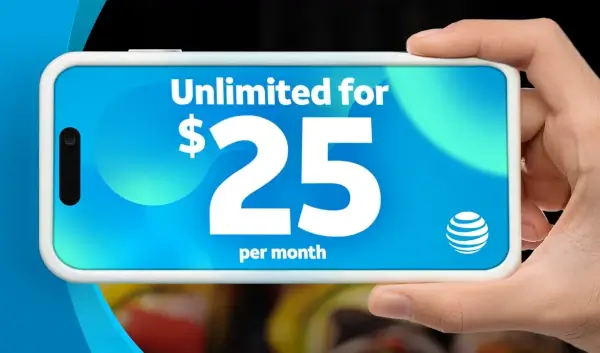
| Monthly Price | $20/mo. | $25/mo. | $35/mo. | $45/mo. | $60/mo. |
Plan prices, features, and availability may change. See AT&T for current offer details.
At a glance, the 12-month plan is the best fit for people who want long-term savings, while the lower-cost monthly unlimited plans work well for users who want flexibility without a large upfront payment. Unlimited Enhanced Plus adds more hotspot and travel value, and Unlimited Ultra is the strongest choice for heavier users who want AT&T’s most premium prepaid features.
As you compare these AT&T Prepaid plans, look beyond the word unlimited. The biggest differences are in hotspot data, data-speed policies, international features, and whether a plan is built for lower monthly pricing or stronger premium features. For some people, a lower-cost unlimited option will be enough. For others, paying more for extra hotspot data, broader travel features, or higher-end prepaid benefits may make more sense in everyday use.
⏵ Shop AT&T Prepaid Plans at AT&T
Once you narrow down the plans, the next step is to compare the features that affect everyday use most.
Key Features That Make AT&T Prepaid Competitive
The best AT&T prepaid plan is not always the one with the lowest sticker price. In many cases, the real difference comes down to features. Talk and text are the baseline, but data policy, hotspot access, international support, and security tools can matter much more once you actually start using the plan every day.
5G Access and Everyday Performance
AT&T includes 5G access on compatible plans and devices, which is important for shoppers who want a more modern prepaid experience. Of course, actual speeds and performance still depend on coverage, device compatibility, and where you use your phone most often. That is why it can help to read more about AT&T Wireless technology and coverage before choosing a plan.
Hotspot Data and Connected Devices
Some AT&T prepaid options include hotspot access, and AT&T also promotes add-ons for customers who need more flexibility. That matters if you ever use your phone to connect a laptop or tablet while away from Wi-Fi. For people who work remotely, travel often, or need backup internet access, hotspot support can turn a good prepaid plan into a much better one.
International Texting and Add-Ons
AT&T highlights unlimited text from the U.S. to over 230 countries and territories on current prepaid offerings, along with add-ons for international calling and travel. That makes prepaid a more useful option for people with family overseas or anyone who spends time communicating across borders.
Security Tools and Level Up
AT&T also promotes AT&T ActiveArmor mobile security and spam call blocking on prepaid plans, which adds practical value beyond basic calling and data. Some monthly prepaid plans also include AT&T Level Up, a feature AT&T describes as a way for qualifying customers to use on-time payment history to move to a new phone on postpaid wireless with $0 down and interest-free financing after six on-time monthly payments.
That may not be the reason most people choose prepaid, but it is still useful. It gives some customers a path forward if they want to start with prepaid now and move into a different device setup later.
How to Start AT&T Prepaid Service
Getting started is usually simple. First, choose whether you want to buy a new prepaid phone or keep your current device. If you are buying new, you can pair a compatible phone with the prepaid plan that makes the most sense for your usage. If you are bringing your current phone, AT&T supports that path through its BYOP process.
After that, activation is the next step. AT&T provides prepaid activation help for setting up the phone, connecting it to the network, and transferring contacts. If you want a broader overview of the process, our guide on how to activate an AT&T Wireless device can help you understand what to expect.
Managing an AT&T Prepaid Account
Once your line is active, AT&T Prepaid is fairly easy to manage. AT&T provides account tools for payments, AutoPay, line management, and support, which helps prepaid feel more practical for everyday use instead of just a short-term option. If you want to keep your wireless service simple, these account tools can make a real difference over time.
AutoPay is one of the easiest ways to manage prepaid service. It can help you avoid missed payments and makes the account more convenient if you do not want to log in manually every cycle. For people using prepaid as their main phone service, that added consistency can be especially useful.
AT&T also supports adding lines to a prepaid account, which can make family service easier to organize. Instead of managing each line separately, account owners can add members and handle payments from one place. That can be a practical setup for households that want prepaid flexibility with simpler account oversight.
Another useful support feature is BridgePay. AT&T describes BridgePay as a way to extend service for seven days when you cannot make a full month’s payment. For customers dealing with a temporary cash-flow issue, that option can help keep service active long enough to avoid an immediate interruption.
Is AT&T Prepaid the Right Choice for You?
If you want no-contract wireless service with predictable costs, flexible plan structures, and the option to bring your own phone, AT&T Prepaid is a strong option to consider. It works especially well for budget-conscious individuals, families trying to lower wireless costs, and users who do not want to deal with credit checks or long-term agreements.
In short, AT&T Prepaid combines the simplicity people expect from prepaid with many of the features they now expect from modern wireless service. You can compare monthly and annual options, look at hotspot support, review international features, and decide whether a lighter-use or unlimited plan makes the most sense. If you are still comparing, visit our AT&T Wireless features guide and our full AT&T Wireless plans page to see how prepaid fits into the bigger picture.
AT&T Prepaid® is a service with no annual contracts, no credit checks, and no hassle.

